Printed from voicescam.com/protect/family-safe-word/ · Updated 23 October 2026
How to set up a family safe word
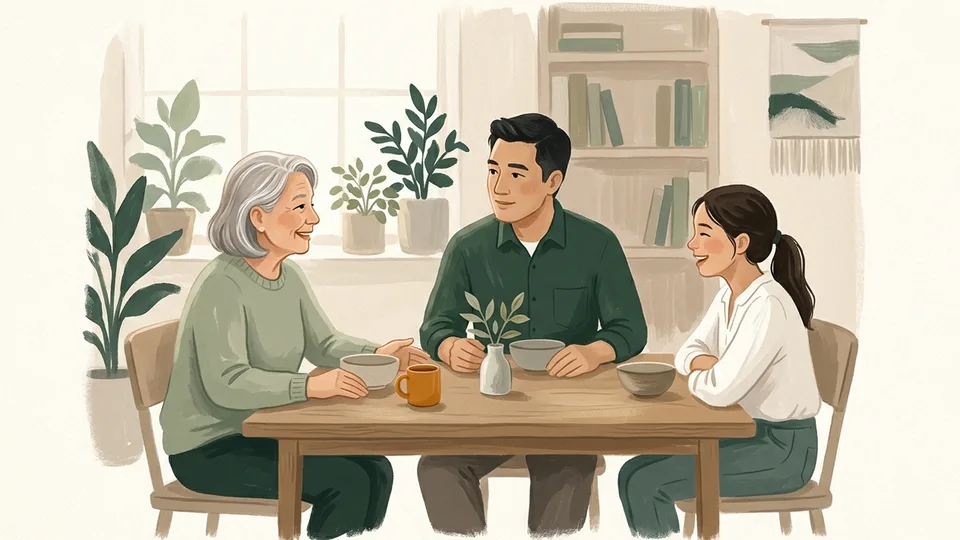
A family safe word is a private word or phrase you agree in person and ask for whenever a call about an emergency asks for money. A cloned voice cannot know it. Choose it, share it face to face, agree when to use it, and keep it off texts and social media.
The short version
- Pick a word or short phrase that nobody could guess from your social media.
- Share it in person with everyone who might call or be called.
- Agree the rule: no money moves on an emergency call without the word.
- Keep it private. Never text, email or post it. Change it if it leaks.
Why a safe word works
A scammer can copy a voice from a short clip, but they cannot copy something that was only ever said across a kitchen table. The FBI recommends that families create a secret word or phrase to verify who is calling (FBI, 2024).
It also gives everyone permission to pause. Asking for the word is not rude. It is the agreed family rule.
How to set up a family safe word
- Gather the family, in person or on a video call you started. Include grandparents, teenagers and anyone who handles money.
- Choose the word together. Two unrelated words work well, like "teapot lighthouse".
- Say it out loud and check everyone can remember it. Older relatives may want it written in a private place at home.
- Agree when to use it. Any call, voice note or message asking for money or secrecy.
- Agree what happens if the caller cannot give it. Hang up and call the person back on their own number.
- Practise once. A short role play makes it feel natural under stress.
Choosing a good word
| Idea | Good or avoid | Why |
|---|---|---|
| Pet's name | Avoid | Often posted online |
| Street you grew up on | Avoid | Common security question, easy to find |
| Two unrelated words | Good | Hard to guess, easy to say |
| A private family joke | Good | Only if it has never been posted |
| A birthday or year | Avoid | Easy to look up |
How to use it on a call
- Stay calm and ask: "What's our word?"
- If they give it, you can talk more. Still check the details if money is involved.
- If they cannot, say you will call back, hang up and call the person on their own number.
Warning signs a caller is dodging the word
- "I forgot it," followed by more pressure.
- Anger or tears when you ask.
- "There's no time for that." Real family will understand the rule.
- They ask you to say the word first. Never say it for them.
Explaining it to older relatives
Keep it simple and kind. Something like: "Some scammers can copy our voices now. If anyone calls asking for money, even if it sounds like me, ask for our word. If they can't say it, hang up and ring me."
For more ideas, read how to protect elderly parents from voice scams.
Keeping the word safe over time
A safe word only works while it stays private. Treat it like a house key and review it now and then.
- Change the word if it is ever written in a text, email, voice note or public post.
- Change it if someone outside the family may have heard it, or after any call where a stranger asked for it.
- When a new partner or carer joins the family circle, decide together whether they should know it.
- Keep any written copy at home, away from your phone, wallet and computer.
A safe word works best alongside other habits. Learn the signs that a caller's voice may be cloned, and cut down the clips scammers can use with our steps to make your own voice harder to copy. For every guide in one place, visit our voice scam protection guides.
Sources
- FBI Internet Crime Complaint Center, public service announcement: "Criminals use generative artificial intelligence to facilitate financial fraud". Published 3 December 2024. Checked 23 October 2026.
- Federal Trade Commission, consumer alert: "Scammers use AI to enhance their family emergency schemes". Published 20 March 2023. Checked 23 October 2026.
Common questions
What if my relative forgets the word in a real emergency?
Hang up and call them back on their own number, or call someone who is with them. A real emergency survives a two-minute check.
Should children know the safe word?
Yes, if they are old enough to keep it private. Children can also use it to check that an adult collecting them from school was really sent by you.
How often should we change it?
Only if it may have been shared, written somewhere public or said in front of others. Changing it too often makes it easy to forget.
Can I write it down?
Keep it out of phones, texts and email. A note in a private place at home is fine for anyone who needs a reminder.